A quality 6.6kW solar system in Brisbane costs $3,900–$6,500 installed in 2026 after the federal STC rebate — and with Queensland’s sunshine, most families pay it back in 2–4 years. Here’s exactly where that money goes, and how to spot a quote that’s too good to be true.
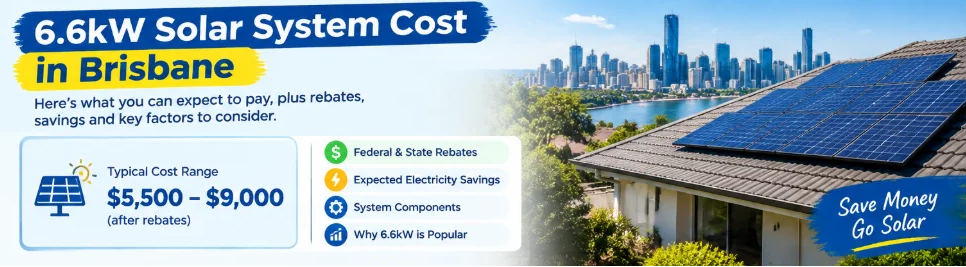
Quick answer: In 2026, a 6.6kW solar system in Brisbane costs around $5,350 for a standard-quality system (after the federal STC rebate). Budget packages start near $3,900–$4,400, while premium systems with high-end panels and inverters run $6,500–$8,000. With Brisbane grid tariffs around 27–31c/kWh, a typical family saves $1,300–$1,900 a year — a payback of roughly 2–4 years.
At Solar Time Energy, we quote and install 6.6kW systems across Brisbane, Ipswich and the Gold Coast every week. This guide reflects real 2026 pricing in South East Queensland — not the national averages you’ll find on comparison sites.
6.6kW Solar System Price in Brisbane (2026)
All prices below include GST and are after the federal STC rebate — the same way they’ll appear on your quote:
| System Tier | Installed Price (Brisbane, 2026) | What You Get |
|---|---|---|
| Budget | $3,900 – $4,400 | Entry-level panels, budget inverter, shorter warranties |
| Standard | $4,800 – $5,800 | Tier-1 panels (e.g. Jinko, LONGi), quality 5kW inverter, 10+ yr warranties |
| Premium | $6,500 – $8,000 | Premium panels (e.g. REC, SunPower), Fronius/SolarEdge inverter, 25 yr panel warranty |
For most Brisbane families, the standard tier hits the sweet spot — tier-one panels and an inverter that will actually last, without paying a premium for features you’ll never use.
What’s Included in a 6.6kW Solar Quote?
The panels themselves are only about a third of the price. A complete, compliant installation also covers:
- Inverter — typically a 5kW unit (see below why 6.6kW of panels pairs with a 5kW inverter)
- Mounting and racking — rails, clamps and roof penetrations suited to your roof type
- Electrical work — DC/AC cabling, isolators, and any switchboard upgrades needed
- Grid connection — Energex application, metering coordination and compliance paperwork
- Labour — licensed electricians, usually a full day for a standard roof
Why Is It Called 6.6kW But Comes With a 5kW Inverter?
This confuses almost everyone, so here’s the plain-English version. A “6.6kW system” usually means 15 modern 440W panels (15 × 440W = 6.6kW) — for example, Jinko Tiger Neo 440W panels, one of the most popular choices in Brisbane right now. The inverter, however, is typically rated at 5kW because that’s the standard export limit Energex applies to single-phase homes in South East Queensland.
Oversizing the panels relative to the inverter is deliberate and efficient: the system “clips” only a small amount of midday output, but you get stronger generation in the morning, afternoon and on cloudy days — when a 5kW inverter would otherwise sit idle. Regulators allow DC arrays up to 133% of inverter capacity for exactly this reason.
The Federal STC Rebate in 2026
The upfront discount on your quote comes from Small-scale Technology Certificates (STCs). For a 6.6kW system in Brisbane, that’s worth roughly $1,700–$1,850 right now — automatically deducted by your installer, no paperwork on your end.
Two things worth knowing: the rebate shrinks every year until the scheme ends in 2030, and it’s slightly more generous in sunnier zones — Brisbane sits in Zone 3 with a 1.382 factor. Waiting doesn’t save you money here either; the rebate only goes one direction.
How Much Power Will a 6.6kW System Generate in Brisbane?
Brisbane is one of the best solar cities in the country — 5.0–5.3 peak sun hours a day. A north-facing 6.6kW system here produces roughly:
- 26–38 kWh per day (seasonal average)
- ~9,400–10,200 kWh per year
Compare that to the average Queensland household using 15–25 kWh a day, and you can see why 6.6kW is the most popular residential size — it covers essentially all of a typical family’s daytime usage with surplus to spare.
Payback Period: How Fast Does 6.6kW Pay for Itself?
With Energex tariffs around 27–31c/kWh and feed-in tariffs of 5–10c, the money is in self-consumption — using your own solar instead of buying from the grid. A typical Brisbane household:
| Scenario | Annual Savings | Payback |
|---|---|---|
| Low daytime usage (out all day) | $1,100 – $1,400 | 4 – 5 years |
| Typical family (home afternoons, A/C in summer) | $1,300 – $1,900 | 2 – 4 years |
| High usage + battery (evening solar too) | $1,900 – $2,400 | 3 – 5 years (battery included) |
Adding a battery changes the maths — for better, if sized right. A 10–13.5 kWh battery is the ideal pairing for a 6.6kW system, and the federal battery rebate currently knocks another ~25–30% off the battery price.
What Makes a 6.6kW Quote Go Up or Down?
- Panel brand — tier-one panels cost a few hundred more but come with 25-year warranties and better yield
- Inverter brand — the component most likely to fail first; Fronius and SolarEdge cost more, budget brands less
- Roof type and access — single-storey tin roof is cheapest; multi-level tile roofs add labour
- Switchboard condition — an old switchboard may need a $500–$1,500 upgrade before solar can connect safely
How to Spot a Too-Good-To-Be-True Quote
A 6.6kW system quoted well under $4,000 in 2026 isn’t a bargain — it’s a signal. Ask the installer for exact panel and inverter model numbers (not just “Tier 1 panels”), confirm they hold SAA accreditation and a Queensland electrical licence, and get at least three quotes from local installers who will actually visit your roof. The cheapest quote usually costs the most over 10 years.
Want a fixed, written price for your actual roof? Request a free 6.6kW quote from our Brisbane team — we’ll confirm system size, panel brand and payback on paper, with no pressure.
Frequently Asked Questions
How much does a 6.6kW solar system cost in Brisbane in 2026?
After the federal STC rebate, expect $3,900–$4,400 for a budget system, around $5,350 for a standard tier-one system, and $6,500–$8,000 for premium components. Most Brisbane families choose the standard tier.
Is 6.6kW enough for a family home?
For most 3–4 person households, yes. A 6.6kW system in Brisbane generates 26–38 kWh a day against typical family usage of 15–25 kWh. If you have a pool, ducted air conditioning or an EV, consider 10kW or adding a battery.
How many panels are in a 6.6kW system?
It depends on panel wattage: 17 × 390W, 16 × 420W or 15 × 440W panels all make roughly 6.6kW. With modern 440W panels like the Jinko Tiger Neo, you need just 15 panels and about 25 m² of roof space.
How long does a 6.6kW system take to pay back in Brisbane?
Typically 2–4 years for a family with reasonable daytime usage — among the fastest paybacks in Australia thanks to Brisbane’s sunshine and Energex’s relatively high electricity tariffs.
Written by Leo — Solar Time Energy. We install solar and battery systems across Brisbane, Ipswich and the Gold Coast.