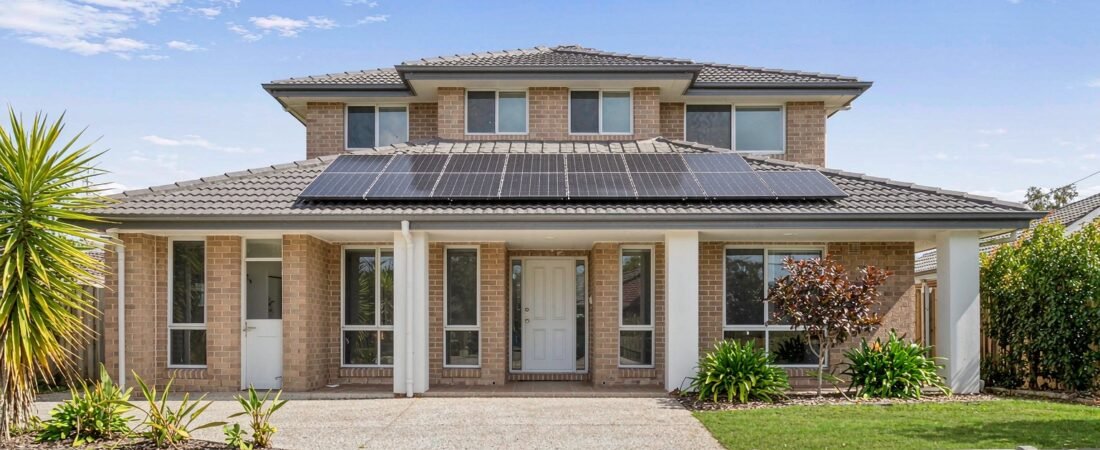
Ipswich has been one of the busiest solar markets in the country for a decade. There are now around 39,426 registered solar installations in the Ipswich local government area, and the 4305 postcode alone counts more than 9,350 homes with rooftop solar. Roughly 60% of Ipswich households already have panels.
The short version, in five numbers
| Energex standing offer — flat rate | 27.97c/kWh | Published standing offer rates, effective 1 July 2026. Some market plans are cheaper — compare on Energy Made Easy before you assume this is your rate. |
| Energex time-of-use evening peak (4pm–9pm) | 47.79c/kWh | Where a battery earns the most, on a TOU plan |
| Federal battery rebate | ~$250–260 per usable kWh of storage | On the first 14 kWh. Not cents per kWh of electricity — this is per kWh of battery capacity |
| Next rebate step-down | 1 Jan 2027 | STC factor falls 6.8 → 5.7, then every 6 months to 31 Dec 2030 |
| Solar installed in the Ipswich LGA | 39,426 systems | Cumulative registered installations, not 39,426 homes and not a 2026 figure |
Which means most homes here have hit the same wall. The panels make plenty of power in the middle of the day, the house uses relatively little of it, and the rest goes onto the grid for a few cents a kilowatt-hour. Meanwhile the family gets home at six, turns on the air conditioning, runs the oven, and buys every one of those kilowatt-hours back at the full retail rate — which on the Energex network is close to 28 cents.
That gap is the entire reason people install a battery. Store the surplus instead of exporting it, and use it in the evening when the grid is most expensive. This guide walks through what a solar battery actually costs in Ipswich in 2026, what the federal rebate is worth right now, and whether the money works out for your particular usage.
What a home battery does on an Ipswich property
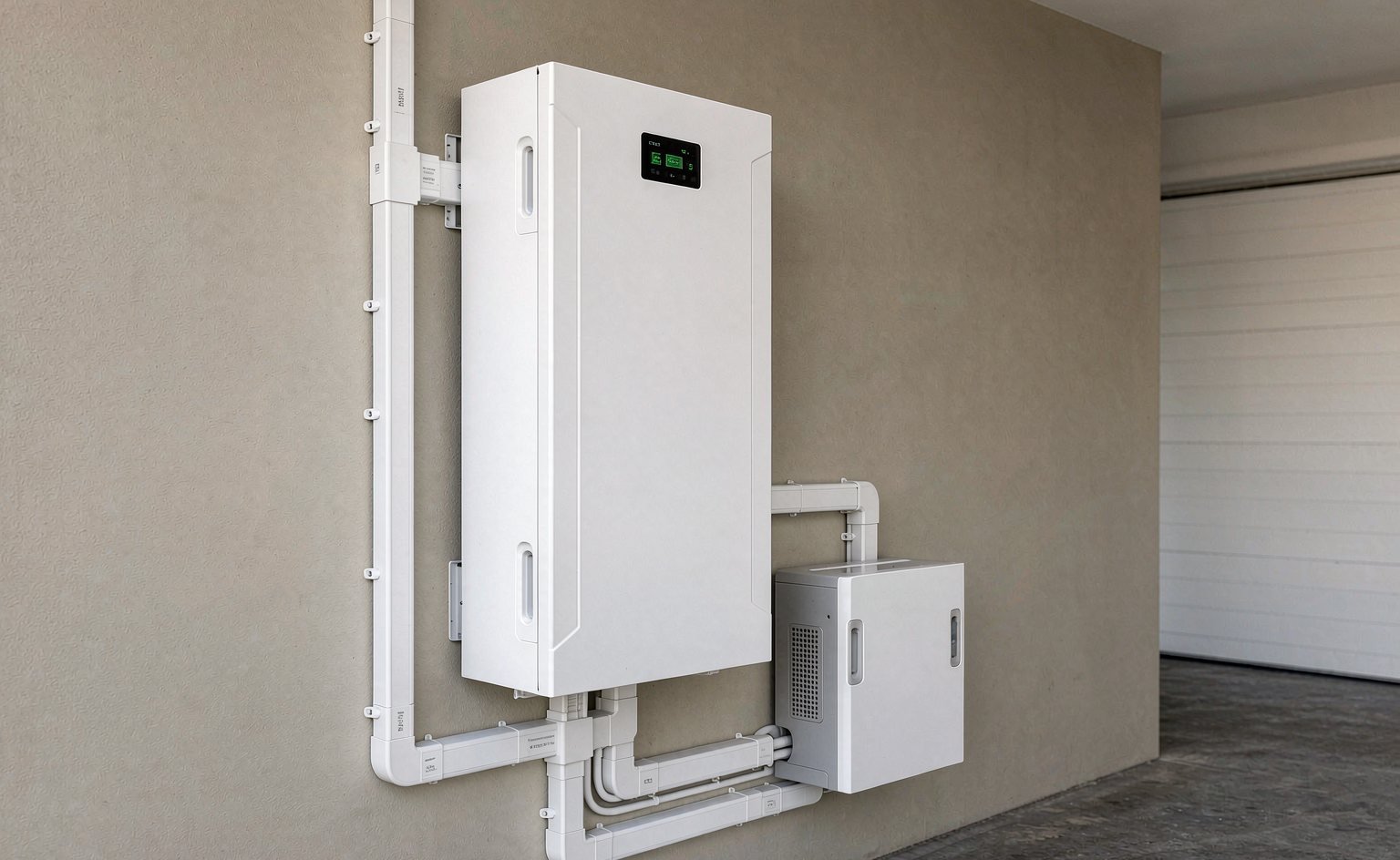
A home battery is not a generator. It does not make electricity. It stores what your panels already made and holds it until you want to use it.
Without a battery, a typical Ipswich household with a 6.6 kW system might self-consume 25–30% of what it generates and export the rest. With a properly sized 10 kWh battery, self-consumption can move up to 50–55%. That single change in behaviour is where the savings come from — not from generating more, but from keeping what you already generate.
The core arithmetic. Importing power on the Energex flat rate costs about 27.97c/kWh. Exporting it earns roughly 4–10c/kWh, depending on your retailer and plan. So every kilowatt-hour you move from the export side to the self-consumption side is worth roughly 20 to 24 cents to you — and on a time-of-use plan, where evening peak sits at 47.79c/kWh, that number is closer to 40 cents.
There are three things a battery does well, and one it does not.
- Shifts solar into the evening. The best use. Cheap, simple, no extra equipment.
- Charges off-peak and discharges at peak. On a time-of-use tariff you can buy power at 6.98c/kWh overnight and use it at 47.79c/kWh in the evening. Strong on paper, but only if your retailer plan actually permits it and you control charging.
- Backs up the house. A hybrid inverter with the right changeover device keeps essential circuits alive during an outage. For a household on the outskirts — Collingwood Park, Rosewood, Mount Crosby, Redbank Plains — where outages are common and drive times are long, this is worth real money on its own.
- What it does not do: cut your peak demand charge by magic, or make your export rate go up. Read any quote claiming otherwise with suspicion.
What electricity actually costs in Ipswich in 2026
Ipswich sits in the Energex distribution zone in South East Queensland. Retail pricing is deregulated, so your retailer sets the rates, but the AER’s Default Market Offer gives a useful reference point. For 2026-27 the Energex residential DMO is $1,988 per year on the flat rate and $1,914 on time of use, based on 4,600 kWh of annual usage. Those caps are fixed for the full financial year, 1 July 2026 to 30 June 2027.
Here is where the money actually sits on a typical Energex plan, based on published standing offer tariffs effective 1 July 2026:
| Tariff element | Rate | What it means for a battery |
|---|---|---|
| Flat rate usage | 27.97c/kWh | The baseline value of self-consumption |
| Flat rate daily supply | 192.01c/day | Fixed regardless of the battery |
| TOU evening peak (4pm–9pm, 7 days) | 47.79c/kWh | Where the battery earns the most |
| TOU shoulder (9pm–11am) | 25.30c/kWh | Cheaper grid option overnight |
| TOU off-peak (11am–4pm) | 6.98c/kWh | Off-peak charging window |
| Controlled load — Super Economy (10pm–7am) | 16.40c/kWh | Alternative if you have hot water or a pool pump |
| Feed-in tariff | ~4–10c/kWh | Retailer-set, often capped daily. This is what you’re avoiding |
Source: Origin and EnergyAustralia published Energex residential standing offer tariffs, effective 1 July 2026, and AER Default Market Offer 2026-27.
Two things worth knowing about the Energex tariff structure. First, the supply charge is a bigger share of your bill than you would expect — around 34% of a typical Energex bill is supply charge, and no battery touches that. Second, the daily supply charge on a flat rate plan ($1.92/day) is higher than on a time-of-use plan ($1.78/day), which partly offsets the higher peak rate. Run the numbers on your own usage rather than trusting a general rule.
Watch the feed-in tariff, not the headline. Many plans advertise 8–10c/kWh but apply that rate only to the first 5 or 10 kWh you export each day, then drop to 1–3c. A 6.6 kW system in summer exports 12–18 kWh a day, so a low cap gets blown through by mid-morning. Compare plans on Energy Made Easy using your actual export profile, not on the headline number.
What a solar battery costs in Ipswich in 2026
Battery prices have fallen a long way, but capacity still drives the price more than brand. Prices below are fully installed, GST-inclusive, for a standard single-storey home with a straightforward switchboard.
| Usable capacity | Installed price (before rebate) | Federal rebate | After rebate | Typical use |
|---|---|---|---|---|
| 5 kWh | $6,000–$8,500 | ~$1,292 | $4,708–$7,208 | Couples, light evening use |
| 10 kWh | $9,000–$12,000 | ~$2,584 | $6,416–$9,416 | Most Ipswich households |
| 13.5 kWh | $14,000–$16,000 | ~$3,458 | $10,542–$12,542 | Large homes or overnight EV charging |
| 20 kWh | $19,500–$26,500 | ~$4,522 | $14,978–$21,978 | Two EVs or whole-home backup |
Indicative installer pricing observed across Australia in 2026, including GST. Confirm against written quotes for your roof.
On a per-kilowatt-hour basis, mainstream LFP systems sit roughly between $740 and $1,100 per usable kWh installed. Bigger is usually cheaper per kWh because the fixed costs — inverter, mounting, wiring, commissioning — are spread across more capacity. The exception is premium integrated brands like the Tesla Powerwall 3, which carries a higher hardware cost but does not need a separate hybrid inverter.
What moves a quote away from these ranges: a switchboard upgrade, a three-phase supply, a two-storey or split installation, long cable runs, and travel outside the metro. A battery added to an existing solar system can cost slightly more than one installed alongside new panels if the existing inverter is not battery-compatible.
The federal battery rebate in 2026 — what you actually get
Queensland’s own Battery Booster grant closed in May 2024, so there is no state battery rebate. Everything comes from the federal Cheaper Home Batteries Program, which is delivered through Small-scale Technology Certificates — the same certificate system that discounts rooftop solar. Your installer creates the certificates, sells them, and passes the value to you as a lower invoice. There is no form to fill in and no cheque to wait for.
Two things changed on 1 May 2026, and both matter.
1. The STC factor dropped. For installations certified 1 May to 31 December 2026 the factor is 6.8 certificates per usable kWh. At recent certificate trading prices that works out to roughly $250–$260 per usable kWh on your quote. The previous factor of 8.4 applied from January to April 2026, which is why some quotes floating around still show older, more generous numbers.
2. The rebate now tapers with size. The full factor applies to the first 14 kWh of usable capacity, then drops sharply:
| Usable capacity band | Share of STC factor | Effective value per kWh | What it means |
|---|---|---|---|
| 0–14 kWh | 100% | ~$250–260 | Best value band. Most homes should sit here |
| 14–28 kWh | 60% | ~$150–155 | Extra capacity earns much less support |
| 28–50 kWh | 15% | ~$37–39 | Effectively unsupported |
| Over 50 kWh | nil | $0 | No certificates created |
Worked examples using 6.8 certificates per usable kWh:
| System | Rebate-eligible capacity | Approximate discount |
|---|---|---|
| 10 kWh usable | 10.0 kWh | ~$2,584 |
| 13.5 kWh (Powerwall 3 class) | 13.5 kWh | ~$3,458 |
| 20 kWh usable | 17.6 kWh after taper | ~$4,522 |
1 January 2027 is the real deadline. The factor drops from 6.8 to 5.7 — a 16% cut — and then steps down every six months: 5.2 in July 2027, 4.6 in January 2028, and so on until the program ends on 31 December 2030. On a 13.5 kWh battery the January change alone is worth about $570. The program is funded to $7.2 billion and is not first-come-first-served, so it will not run out — but waiting genuinely costs you money.
Eligibility, in full: a battery of 5–100 kWh nominal capacity on the Clean Energy Council’s approved list; paired with a rooftop solar system (existing or installed at the same time — battery-only does not qualify); VPP-capable battery and inverter if you are grid-connected within 1 km of the network; installed by an SAA-accredited installer; and the discount applied as a point-of-sale reduction. No means test. One claim per property, on the NMI.
VPP-capable does not mean you have to join a VPP. It means the hardware has to be capable. Tesla, BYD, Sungrow, SolaX, Alpha ESS, GoodWe and Enphase all qualify. If you do join one, expect an extra $100–$250 a year depending on the provider and how often your battery is dispatched.
How much battery do you actually need?
With 5.2 average peak sun hours a day, the Ipswich region produces about 1,610 kWh per installed kW per year. A 6.6 kW system therefore generates roughly 10,600 kWh annually — enough to fill a 10 kWh battery for most of the year, though not every day.
Size to your evening load, not to your day-time generation. In a typical Ipswich summer the house draws hard from 5pm onward: air conditioning, the oven, the pool pump, chargers, the fridge running hard against a hot kitchen. Across a year, about 3,000 kWh of battery throughput per year from a 10 kWh unit is realistic once you account for depth of discharge, round-trip efficiency of around 90–96%, and days when the battery simply isn’t full.
That 3,000 kWh figure is the one to sanity-check a quote against. If someone is promising you 8,000 kWh a year out of a 10 kWh battery, they are not accounting for losses and the payback on paper will not survive contact with your bill.
Quick sizing guide. Couple, empty during the day, light evening use → 5 kWh. Family of four, air conditioning running most evenings → 10 kWh. Whole-home air conditioning plus an EV charging overnight → 13.5 kWh. Whole-home backup for two EVs → 20 kWh, and note the rebate barely helps above 14 kWh.
The honest payback maths
Most solar battery marketing quotes you the best case. Here is a conservative version, using a 10 kWh system and the Energex tariffs above. All figures assume you already have solar, or are installing the battery alongside it.
| Scenario | Annual benefit | Net cost after rebate | Simple payback |
|---|---|---|---|
| Flat rate, self-consumption only. ~3,000 kWh shifted from a 5c export rate to 27.97c import, plus $100–250 VPP income. | $800–$950 | ~$6,400–$9,400 | 7–12 years |
| Time-of-use, solar shifting only. Same 3,000 kWh shifted to the 47.79c evening peak, plus VPP income. | $1,300–$1,600 | ~$6,400–$9,400 | 4–7 years |
| Time-of-use with off-peak grid charging. Adds overnight charging at 6.98c/kWh discharged into the 47.79c peak, subject to your plan’s terms. | $1,900–$2,400 | ~$6,400–$9,400 | 3–5 years |
Three honest caveats. The grid-charging scenario depends entirely on your retailer allowing export-and-import cycling — some plans deduct the value, some restrict charging windows. The high end of each range assumes VPP participation and disciplined battery management. And none of these ranges includes the value of not having a dark, powerless house during a storm, which in Ipswich is not a small number.
Broadly: on a flat rate, treat a battery as a 7 to 12 year proposition driven partly by resilience. On a time-of-use tariff, it is a 3 to 7 year financial proposition. Check which tariff you are actually on before deciding which row above describes you.
What happens on installation day
A 10 kWh installation is normally a single day on site. Here is the actual sequence for a retrofit onto existing solar, which is the most common job we do in Ipswich.
Pre-visit and shade check
We read the roof from above, not just from the driveway. Ipswich homes in the newer estates — Springfield, Ripley, Rosewood — have straightforward north and west roof planes. Older houses in Brassall, Thagoona, Yamanto and the CBD ring out more often, and a proper shade study before signing avoids arguing about output afterwards.
Switchboard and phase check
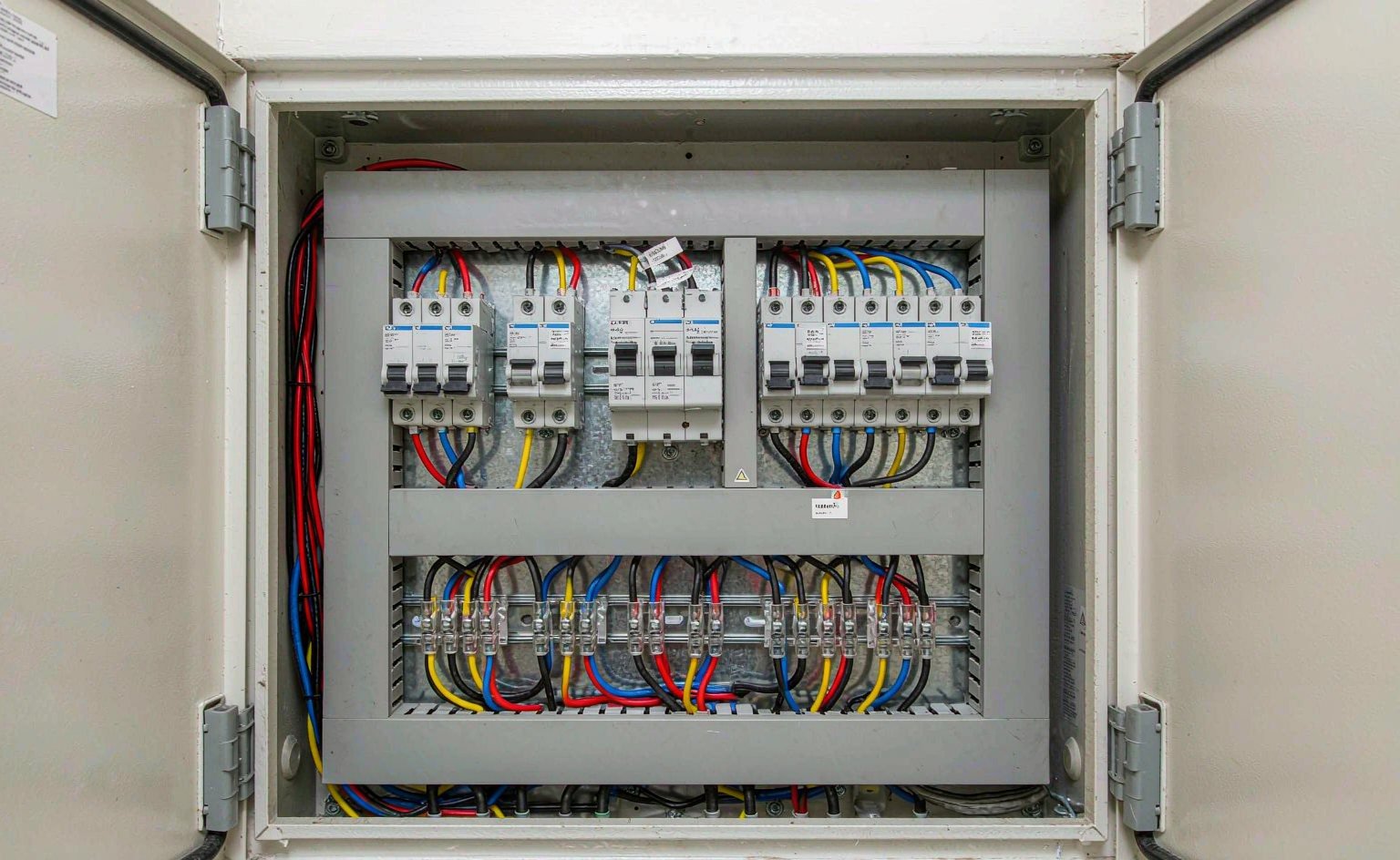
Single-phase homes are usually limited to a 5 kW export, three-phase homes can go larger, and anything above the limit needs a connection application to Energex. The battery also needs a changeover device, which means work at the switchboard. If your switchboard is old or has limited spare ways, that is where cost gets added — better to know before the truck is booked.
Mounting and wiring
Ipswich is outside the cyclone belt but gets serious storms and hail every spring and summer. Panel impact ratings and an engineered mounting system matter more here than in a coastal council area, as does a shaded, ventilated location for the inverter — humidity is hard on equipment mounted in the open.
Battery and inverter commissioning
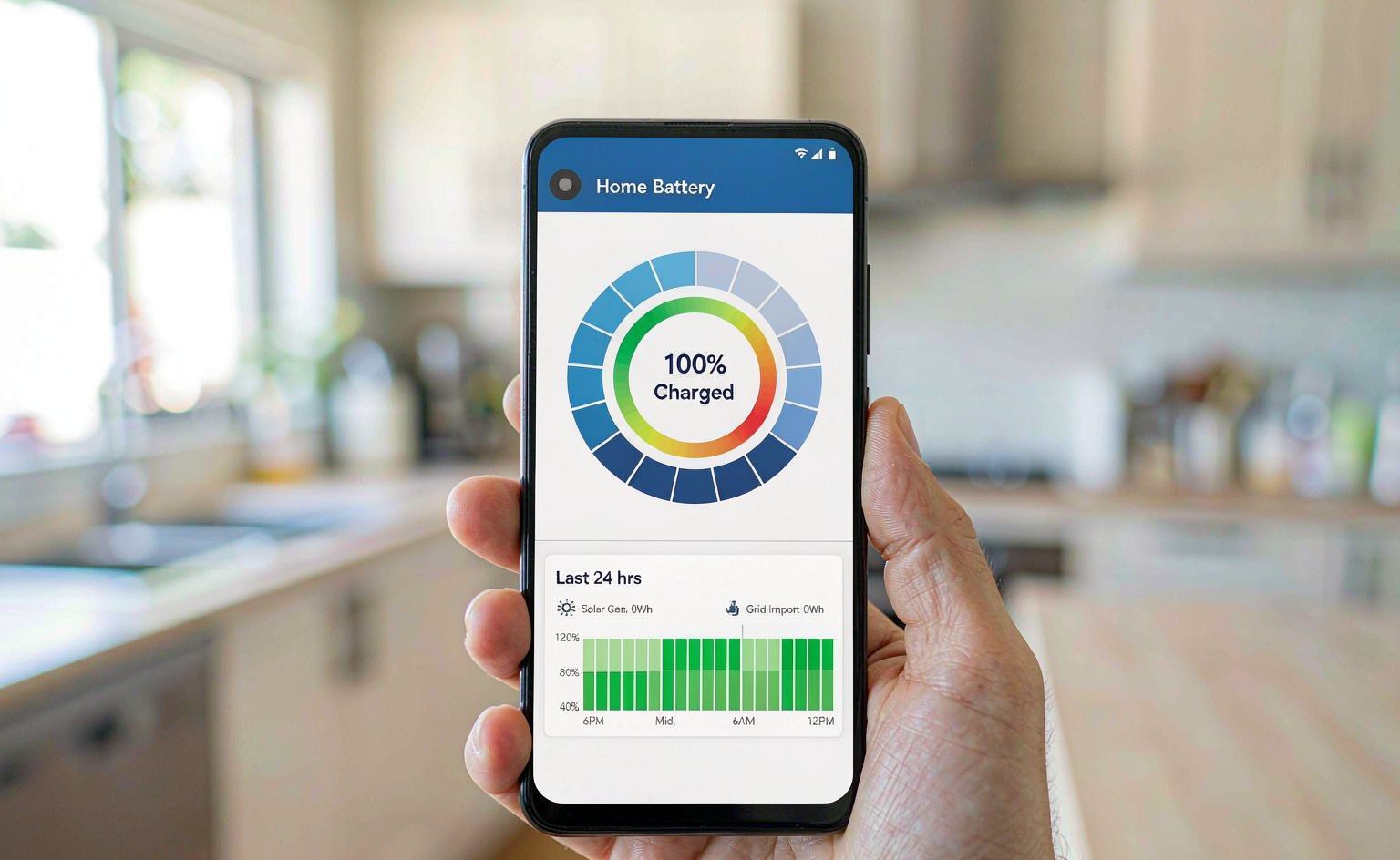
Wall-mounted battery, hybrid inverter either added or reconfigured, then full commissioning and settings for time-of-use optimisation and backup circuits. We walk you through the monitoring app at this point, because the app is how you will confirm the system is doing what the quote promised.
Paperwork
STC assignment, Energex connection if needed, CEC compliance, warranty registration, and a written statement of your export limit. This is the part most installers rush, and it is the part that determines whether your system actually keeps performing in three years.
Nine questions to ask before you sign anything
- What is the export limit on my street, in writing? Not the theoretical maximum. Your actual, approved figure.
- Is the quote fully installed? Hardware-only pricing is the most common bait in this industry. Ask whether a separate hybrid inverter is included.
- Is the rebate a separate line item? A quote that gives one blended number makes comparison impossible. You should be able to see the discount arithmetic.
- What is the usable capacity, not the nameplate capacity? A 10 kWh nameplate unit may only offer 9 kWh usable. The rebate is calculated on usable capacity from the CEC list.
- What is the round-trip efficiency? Current LFP batteries run 90–96%. A 5-point gap is worth several hundred dollars over a decade of daily cycling.
- What is the continuous power output? A 5 kW battery will run air conditioning and an induction cooktop together. A 3 kW unit will not.
- How many backup circuits does this actually cover? And what happens during a switchover — seconds or milliseconds?
- Who owns the STCs? You should receive the full value as a discount on the invoice. If the installer keeps them, you should see that reflected in the price.
- What is the warranty on capacity, not just on parts? Most good batteries warrant 70–80% capacity retention at ten years. A warranty that only covers failure is not much of a warranty.
When a battery doesn’t make sense
We would rather tell you this than take a job that doesn’t pay.
You’re barely home. If the house is empty during the day and draws almost nothing until after sunset, solar alone captures most of the available value. A battery will still save you something on evening consumption, but the case weakens considerably.
Your feed-in rate is genuinely good. If your plan pays 10c/kWh uncapped, the value you are giving up by self-consuming is smaller than it looks at 5c. Check your actual daily export volume against your plan’s cap before assuming a battery is a big win.
Your switchboard needs serious work. Old switchboards, limited spare ways and asbestos-containing panels on an addition all add cost that can push payback past the point of sense. Sometimes the honest answer is to re-quote the switchboard first.
You expect to move in under five years. The battery has a ten-year warranty but the economics need time to accumulate. If you are moving soon, put the money into solar only.
You want it to run on its own during an outage. Standard grid-tied batteries need the grid present to start. Whole-home, grid-forming backup with correct changeover is a larger and more expensive job. Ask for it explicitly.
Frequently asked questions
How much does a solar battery cost in Ipswich in 2026?
A 10 kWh home battery fully installed typically costs about $9,000 to $12,000 before the federal Cheaper Home Batteries discount, which takes roughly $2,584 off. That puts most Ipswich households in the $6,400 to $9,400 range. A 13.5 kWh premium system such as a Tesla Powerwall 3 runs about $14,000 to $16,000 installed.
Is there still a battery rebate in Queensland in 2026?
Yes. Queensland’s Battery Booster grant closed in May 2024, so the federal Cheaper Home Batteries Program is the only battery discount available. For installations certified between 1 May and 31 December 2026 the STC factor is 6.8 per usable kWh, worth roughly $250 to $260 per usable kWh. The factor drops to 5.7 on 1 January 2027 and steps down every six months until the program ends on 31 December 2030.
Do I need solar to get the battery rebate?
Yes. The battery must be paired with a rooftop solar system, either one you already own or one installed at the same time. The battery and inverter must be VPP-capable and on the Clean Energy Council’s approved list, and the work must be done by an SAA-accredited installer. There is no means test, and the discount comes off your invoice at the point of sale rather than as a later payment.
How long does a battery take to pay for itself in Ipswich?
It depends on your tariff and how you use power. On a flat rate around 27.97c/kWh, a 10 kWh battery that shifts roughly 3,000 kWh a year from a 5c export rate to self-consumption saves about $800 to $950 a year including VPP income — a 7 to 12 year payback. On a time-of-use tariff with an evening peak of 47.79c/kWh, solar shifting alone can save $1,300 to $1,600 a year, and adding off-peak grid charging takes it to roughly $1,900 to $2,400 — a 3 to 5 year payback.
How big a battery do I need?
For most Ipswich households a 10 kWh usable battery is the sweet spot. With 5.2 average peak sun hours a day, a 6.6 kW solar system produces about 10,600 kWh a year in the Ipswich region, enough to fill a 10 kWh battery for most of the year. Go to 5 kWh if you’re a couple with light evening use, and 13.5 kWh or more if you run whole-home air conditioning or charge an EV overnight.
What happens during a blackout?
A grid-tied battery with a hybrid inverter can form an islanded backup circuit and keep essential circuits running — typically lighting, refrigeration and a couple of power outlets, sometimes air conditioning. Covering the whole house requires the correct changeover device and switchboard work. Your installer will confirm what your specific system can support. And again: you are not required to join a VPP to get the rebate.
Does installing a battery void my solar warranty?
Not if the battery is compatible with the inverter and installed to the manufacturer’s specifications. Some solar inverters cannot be retrofitted with a battery at all. Others require a firmware update or a specific hybrid model. This is worth confirming in writing before you sign — retrofitting storage onto an existing string inverter is the most common reason battery projects get delayed.
How long does installation take?
One day for a standard retrofit onto existing solar. Two days if the switchboard needs a changeover device or additional ways, or if you’re installing solar and battery together. Energex connection applications for a non-standard export limit can add weeks of paperwork before installation, which is another reason to ask for your actual export limit early.
Get a battery assessment, not just a quote
Every home battery conversation should start with your last four quarterly bills, not with a product. Send them over and we’ll work out your real evening load, your real export profile, and what a battery would actually put back on your bill in year one — including the rebate line by line.
If a battery doesn’t pay in your particular situation, we’ll tell you and quote the solar upgrade instead. We’d rather do that than install something that disappoints you in February.
Book a battery assessment or call 1300 712 020 and we’ll walk through it.