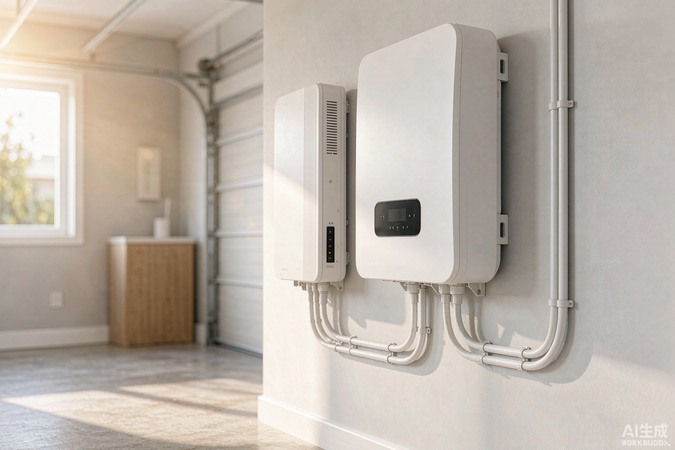
Thinking about adding a home battery but not sure what’s actually available in 2026? Here’s the straightforward picture: Australia’s federal Cheaper Home Batteries Program is currently worth around $250 per usable kilowatt-hour, which works out to roughly $2,500 off a typical 10kWh battery — applied automatically to your quote, with no paperwork on your side.
What is the Cheaper Home Batteries Program?
The federal government launched this program in July 2025 to make home batteries more affordable. It works through the same Small-scale Technology Certificate (STC) system that has been cutting the cost of rooftop solar for years. Your installer creates certificates against your battery’s usable capacity and passes the value to you as an upfront discount. You never apply, wait, or claim anything later — the lower price is simply on your invoice.
How much can you actually save in 2026?
Since 1 May 2026, the rebate is based on a rate of about $250–260 per usable kWh, up to the first 14kWh of capacity (which covers most home batteries):
10kWh battery — roughly $2,500–2,700 off
13.5kWh battery (e.g. a Powerwall 3) — roughly $3,500 off
14kWh and above — the rate drops to 60% for the next 14kWh, so oversizing to chase a bigger rebate usually doesn’t pay off
The exact dollar figure depends on your battery size and the certificate price on the day your installer locks the quote.
The date worth remembering: 1 January 2027
The rebate steps down every six months. On 1 January 2027 the rate drops by roughly 16% — on a 10kWh battery, waiting until then costs you about $400. It doesn’t disappear; it just keeps shrinking, so installing sooner captures more value.
Who qualifies?
Any homeowner, small business or community organisation — no income test
Your battery must be installed by a CEC-accredited installer
The battery must be on the approved product list and have 5–100kWh nominal capacity
It must be connected to a new or existing solar system (retrofits are fully eligible)
The battery must be VPP-capable — but you do not have to actually join a virtual power plant
One rebate per property
What about state rebates?
Most state battery schemes have closed, and the federal program is now the main game. A few states still add extras you can stack on top:
New South Wales — no upfront rebate, but the new Home Energy Saver offers an interest-free loan up to $15,000, plus a VPP sign-up incentive of around $1,100–1,500
Western Australia — the Residential Battery Scheme adds up to $1,300 (Synergy) or $3,800 (Horizon Power) plus interest-free loans up to $10,000
ACT — no cash rebate, but the Sustainable Household Scheme offers low-interest loans up to $20,000
Victoria, Queensland, South Australia, Tasmania, NT — federal program only (Queensland’s Battery Booster and Victoria’s battery rebate are closed)
The maths is simple: with typical feed-in tariffs around 3–10 cents per kWh but evening electricity costing 30 cents or more, storing your own solar power is where the real savings are in 2026.
Want to know exactly what your home would pay after the rebate? Call us on 1300 712 020 or request a free quote — we’ll size your battery to your actual usage and show you the discount on your written quote before you commit. Our team installs across Brisbane, the Gold Coast and Ipswich, and we’ll handle every part of the paperwork for you.